

How to Stop My Dog Pulling on the Leash: A Calm, Practical Guide

What if a calmer walk begins not with a tighter grip, but with a small change in what you reward? When your dog pulls ahead, outings can feel tiring, especially when familiar routes bring new smells, people or dogs. Learning how to stop my dog pulling on the leash starts with noticing what your dog is trying to reach and rewarding a more relaxed way of walking.
Progress can be uneven, particularly around distractions. With patient, consistent practice, loose lead walking can become a more comfortable shared habit rather than a battle of strength. This guide offers a practical routine, explains how rewards and pauses help your dog learn, and shows how to choose manageable places to practise. You’ll also learn when personalised training or professional dog walking in Sotogrande could support calmer outings together.
Table of Contents
Why does my dog pull on the leash, and what can I change?
A dog pulling ahead is often trying to reach something rewarding: a scent on the verge, an interesting sight or a familiar destination. If moving forwards follows a tight lead, pulling can become a learned walking pattern. It does not mean your dog is being deliberately difficult. The first step in learning how to stop my dog pulling on the leash is to notice what pulling helps them reach.
Loose lead walking means your dog can walk at a comfortable pace with slack in the lead, rather than being expected to stay precisely beside you in a strict heel. A lead connects dog and handler, as this overview of the leash explains, but calm walking comes from the habits you build together.
For a practical demonstration of leash walking, watch this training video:
How the surroundings can affect leash pulling
Exciting scents, unfamiliar surroundings and nearby dogs can all make it harder for your dog to focus on you. A busier path in Sotogrande may have more tempting sights and passing activity than a quieter residential walk, so your dog may manage the two settings very differently.
When the lead tightens, note where you are, what has caught your dog’s attention and whether they can respond to you. These details help you choose a manageable place to practise. If your dog cannot take an interest in you, the setting may be too distracting for learning at that moment. Avoid labelling them naughty or stubborn; their behaviour can help you see what feels rewarding or challenging.
How to teach loose lead walking with a simple daily routine
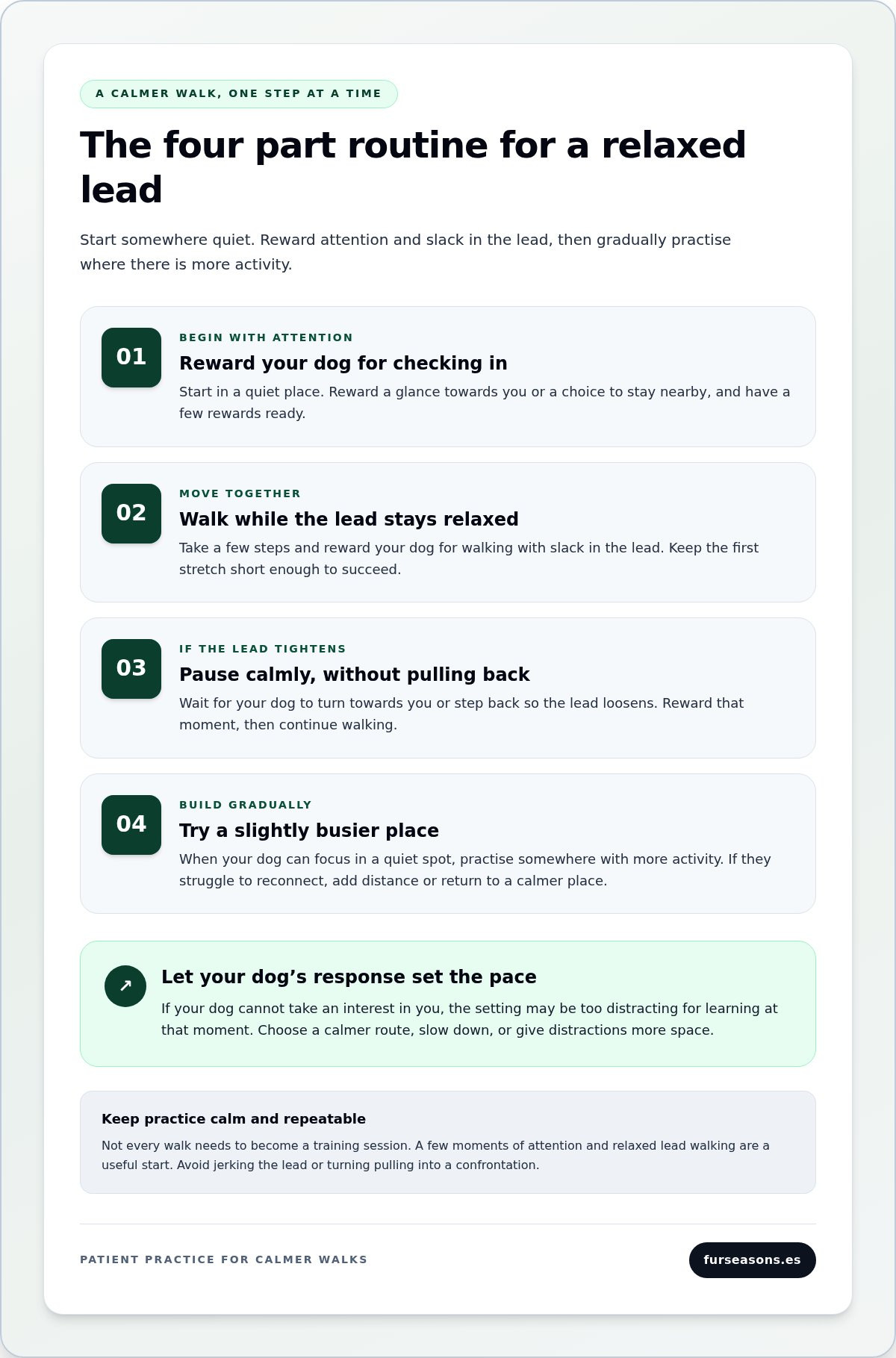
Keep practice calm and achievable. Start in a quiet place where your dog can notice you without competing distractions. Once they can reconnect with you there, gradually practise in places with more activity.
Begin with attention. Reward your dog when they glance towards you or choose to stay nearby. Have a few rewards ready so you can respond promptly.
Move while the lead is relaxed. Take a few steps and reward your dog for walking with slack in the lead. Keep the first stretch short enough that they can succeed.
Pause if it tightens. Stop without pulling back. Wait for your dog to turn towards you or step back so the lead loosens, then reward and continue.
Practise in new settings gradually. When your dog can focus in a quiet spot, try a slightly busier route. If they struggle to reconnect, create more distance from distractions or return to a calmer place.
Brief, repeatable practice helps make the routine clear. You do not need every walk to become a training session: a few moments of attention and relaxed lead walking are a useful start. Having suitable training treats and dependable walking accessories from retailers like Gaia Pets can help you reward good focus along the way. Keep your response consistent, and let your dog’s ability to reconnect guide the pace. If they pull as soon as you leave home, practise a few steps in a quieter area before continuing along your usual route.
What should I do when my dog starts pulling?
Stay composed and avoid jerking the lead or turning the moment into a confrontation. Pause, give your dog a moment to notice you, then reward them as soon as they reconnect or create slack. Continue walking while the lead remains relaxed. This makes moving forward part of the reward, rather than allowing pulling to take your dog straight to what they want.
If you’re asking how to stop my dog pulling on the leash, personalised practice can help you build a routine around your dog and your usual walks. Explore our professional dog walking in Sotogrande for supportive care that makes enjoyable exercise part of your dog’s day.
When to adjust the walk or seek tailored dog training
Even with consistent practice, some walks will feel harder than others. If a route is crowded or full of distractions, make the task easier instead of expecting your dog to manage more than they can comfortably handle. Choose a calmer route, slow your pace and give other dogs or exciting activity more space where possible. A quieter setting can help your dog focus and give you both room to practise.
Making walks more comfortable around Sotogrande
Notice how your dog responds to different surroundings. They may find a peaceful residential walk easier than a busy path, or need extra distance when another dog approaches. Adjusting the route and pace is not a setback. It is a thoughtful way to support your dog’s comfort while building skills gradually. Professional dog walking in Sotogrande can also support enjoyable exercise as part of your dog’s care.
Consider tailored dog training if you have practised consistently but still struggle to make progress, or if your dog finds everyday walks difficult to manage. A personalised approach can take account of your dog’s responses and the situations you encounter, helping you decide what to practise next. Learning how to stop my dog pulling on the leash takes time, and thoughtful guidance can help you move forward without expecting an overnight change.
The Fur Seasons offers personalised dog training and professional care in Sotogrande. If you’d like support with calmer walks, message us on WhatsApp at +34 711 07 34 13 or book online. 🐾
Make each walk a calmer step forward
Loose lead walking develops through patient, consistent practice. Notice what draws your dog ahead, reward attention and relaxed lead moments, and make walks easier by choosing calmer routes or giving distractions more space. If progress remains difficult, tailored guidance can help you decide what to practise next. Small steps can build a more comfortable routine for you both.
The Fur Seasons offers personalised dog training in Sotogrande, alongside individual and group dog walks to support your dog’s exercise and wellbeing. If you’re still wondering how to stop my dog pulling on the leash, thoughtful support can make the next steps feel clearer.
Ready for support with calmer walks?Message The Fur Seasons on WhatsApp at +34 711 07 34 13 🐶✨ or book online for professional, personalised dog care in Sotogrande. With patience and the right guidance, you and your dog can enjoy a more relaxed journey together.
Frequently Asked Questions
How do I stop my dog pulling on the leash straight away?
There usually isn’t a lasting instant fix, but you can respond calmly in the moment. Stop moving when the lead tightens, wait for your dog to look back or create slack, then reward and continue. Learning how to stop my dog pulling on the leash takes consistent practice, so begin in a quiet setting where your dog can focus.
Should I stop walking when my dog pulls?
Yes, pausing calmly can help prevent pulling from taking your dog straight towards what they want. Keep your hands steady rather than jerking the lead, and wait for your dog to turn towards you or loosen the lead. Then reward that choice and move on. Consistency helps your dog understand that a relaxed lead keeps the walk going.
Can a dog learn loose lead walking at any age?
Dogs can learn new walking habits at different life stages. Keep expectations suited to your dog’s experience, energy and ability to focus, and make practice manageable rather than demanding a perfect heel. Reward small moments of attention and a relaxed lead. If you’re unsure how to adapt the routine, personalised training can offer supportive guidance.
What should I do if my dog pulls more around other dogs?
Give your dog more space from other dogs and choose a quieter route or time for practice where possible. Reward them for noticing you, then calmly move away if they’re too distracted to reconnect. Avoid forcing an approach. If this remains difficult on walks in Sotogrande, The Fur Seasons offers personalised dog training to help you work on a suitable routine.
Comments