

Why Is My Dog Scared of the Groomer? How to Build Comfort

A frightening grooming visit can begin before your dog reaches the table. If you’re asking why your dog is scared of the groomer, possible causes include unfamiliar handling, noisy tools, sensitive procedures such as nail clipping, or a past unpleasant experience. Anxiety may start during the car journey and continue into the appointment. Fear isn’t stubbornness; it signals that your dog feels unsure or uncomfortable.
It’s understandable to feel concerned when your much-loved companion trembles, pants, or resists being handed over, especially when their coat still needs care. Comfort can be built gradually through calm handling, patient introductions, and positive associations repeated over time. This guide explains what may cause grooming anxiety, how grooming can be made more comfortable, and how familiar routines at home, in the car, and around the salon can help your dog feel safer. Each relaxed step can make the next visit more manageable.
Table of Contents
1. How do groomers handle anxious dogs?
Grooming can feel unsettling because it involves unfamiliar handling around the paws, ears, and face, as well as the sounds of dryers or clippers. Nail trimming may be especially difficult. Watch for panting, whining, salivating, or trembling. These signs may mean your dog is uncomfortable, not being difficult.
Your body language can affect the handover. Stay calm and hand your dog over without a long, anxious goodbye. Some dogs settle within minutes after their owner leaves. In Spain, look for a groomer who notices your dog’s body language, allows breaks, and will pause to speak with you if continuing seems unsafe. Afterward, calmly ask what the groomer observed.
For practical guidance on helping your dog become more comfortable with paw handling, watch this video:
Gentle restraint may be needed for safe grooming, but a careful groomer adapts their handling and gives a distressed dog a break. At home, introduce grooming sounds gradually and reward relaxed behaviour. Keep each touch brief, especially around sensitive paws.
If your dog’s fear is severe, attempts trigger aggression, or training isn’t helping, speak with your veterinarian before considering medication. Car anxiety can affect the whole visit, too. If your dog feels sick or distressed during the journey, your vet can advise whether anti-nausea medication may help with motion sickness.
2. Building positive associations through routine and time
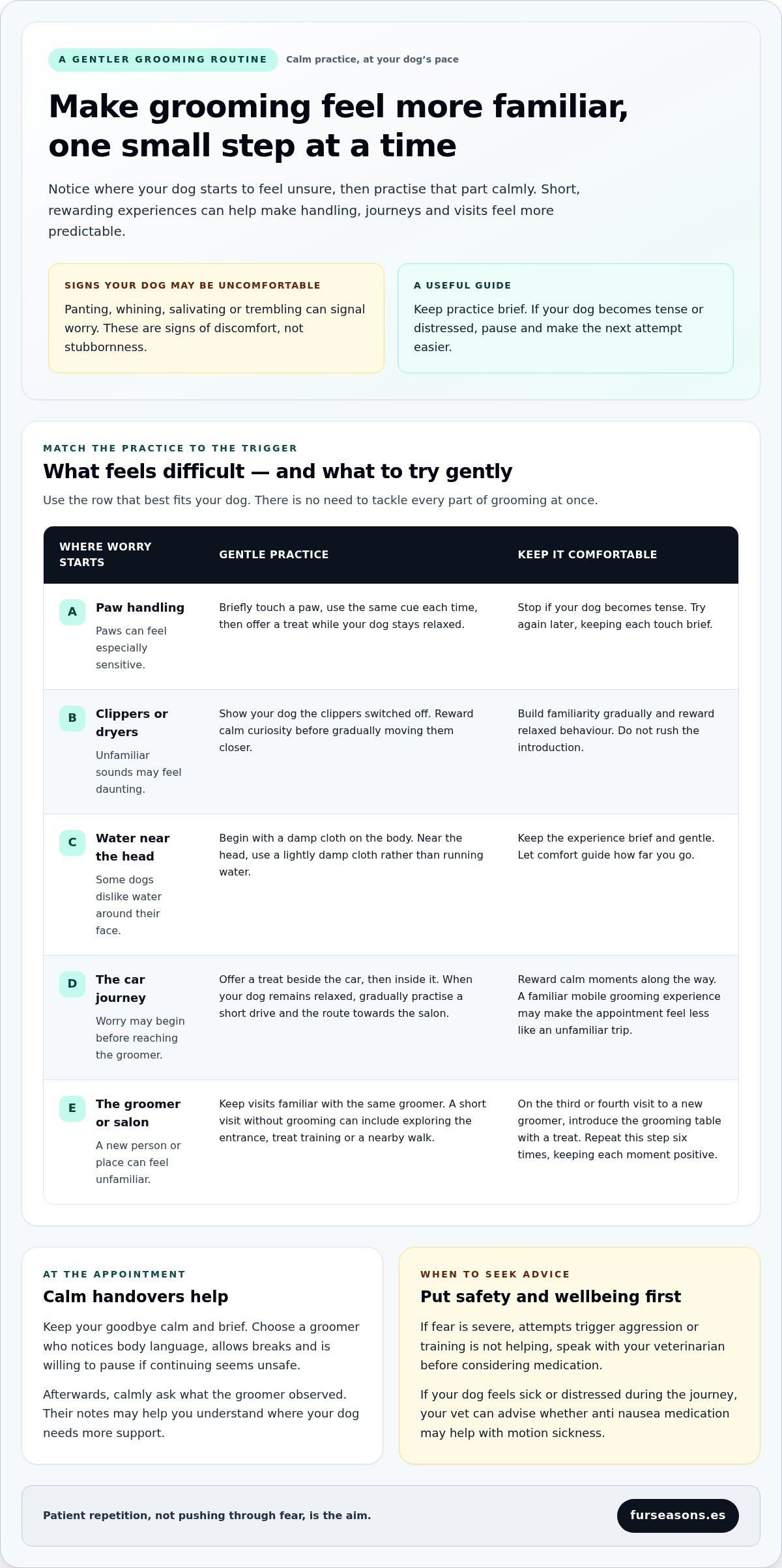
Before the appointment, practise briefly at home. Gently touch a paw, use the same cue each time, then offer a treat while your dog stays relaxed. Stop if they become tense and try again later. This turns touch into a predictable, rewarding routine instead of a surprise.
Keep visits familiar by returning to the same groomer, so your dog can build trust through repeated, calm experiences. A short visit without grooming can help: let your dog explore the entrance, enjoy treat training, or take a walk nearby. On the third or fourth visit to a new groomer, introduce the grooming table and give a treat; repeat this step six times, keeping each moment positive.
At home, introduce grooming sounds gradually. First show your dog clippers while they’re switched off, and reward calm curiosity before moving them closer. For water practice, start with a damp cloth on the body. If your dog dislikes water near their head, use a lightly damp cloth rather than running water, and keep the experience brief. Gentle exposure can build comfort without overwhelming them.
Make the journey part of the routine, too. Offer a treat beside the car, then inside it, before attempting a short drive. If your dog remains relaxed, gradually practise the route towards the salon. A calm, familiar mobile grooming experience can also make the appointment feel less like an unfamiliar trip. Progress comes from patient repetition, not pushing through fear.
3. Fear associations with car rides and groomer visits
Fear may begin before the appointment. The car journey, the street near the salon, or the waiting area can become warning signs if they predict an unsettling experience. A previous painful or frightening visit can also make later handling feel unsafe. A bad grooming experience can cause a dog to fear the groomer, and that fear may extend to the journey and the next appointment.
Break the routine into small, rewarding steps. Offer a treat beside the car, then inside it, and reward your dog again near the groomer’s street or waiting area. Keep practice calm and brief, and pause if your dog becomes distressed. This helps change what those familiar places predict, without asking your dog to manage the whole journey at once.
Notice where your dog’s worry begins. If they’re relaxed at home but anxious in the car, start by practising calm moments around the vehicle. If they remain comfortable until they reach the salon, focus on the street or entrance. For a very fearful dog, a different groomer and setting may help create new associations with another person and place.
After an appointment, note the earliest trigger and your dog’s response, such as refusing to approach the car or trembling near the entrance. Share these observations calmly with the groomer, then make the next practice session easier. A gradual mobile grooming appointment may also reduce the car journey as part of the grooming experience.
The Fur Seasons: Overnight Care
The Fur Seasons offers Mobile Dog Grooming from a premium mobile grooming van, bringing grooming to your doorstep in Sotogrande. The team uses high-quality products such as Artero and tailors care to your dog. This may suit owners who prefer their companion to be groomed close to home.
For other care needs, The Fur Seasons also offers Dog Training and Overnight Care. Choose the option that best fits your dog and your family’s routine in Sotogrande and the surrounding Costa del Sol.
For a friendly conversation about your dog’s care, message The Fur Seasons on WhatsApp at +34 711 07 34 13, or book online at www.furseasons.es.
Make the Next Step Feel Gentle
If you’re still wondering why your dog is scared of the groomer, let their comfort guide your next step. Choose a manageable approach that suits your dog and your family, whether that means discussing a different grooming arrangement or choosing care that fits your routine.
For dog owners in Sotogrande and the Costa del Sol, The Fur Seasons offers Luxury Mobile Grooming, Day Care and Overnight Care. Consider which option best supports your dog’s needs and brings greater ease to your day.
For a thoughtful conversation or to arrange care, message The Fur Seasons on WhatsApp at +34 711 07 34 13, or book online at www.furseasons.es. A gentle next step can help you and your dog move forward with confidence. 🐾
Frequently Asked Questions
My dog is scared by the groomer but desperately needs grooming. What do I do?
Arrange a coat assessment and agree which areas need attention first, rather than attempting a complete home trim. For routine planning, short coats such as Beagles and Labradors may need grooming every 2–3 months; medium coats may need trimming and brushing every 6–8 weeks. High maintenance coats may need grooming as often as every 4 weeks.
How do groomers handle anxious dogs?
Ask the groomer to consider whether your dog’s discomfort could be physical as well as emotional. Cold, wetness, or muscle fatigue can make grooming uncomfortable, while shaking may also come from excitement or overstimulation. Explain when the shaking starts, such as after bathing or during drying. This can help identify possible causes and make the session more comfortable.
If I go to a new groomer, how do I avoid the same old fear?
Prepare a brief with your dog’s coat type, preferred trim, sensitivities, and any recent changes in health or behaviour. Include practical details, such as whether they tolerate brushing better before or after a walk. This gives a new groomer useful context from the start and helps keep your dog’s care consistent.
OK, so how do I fix this?
If your dog’s reaction is new or includes unexplained shaking, consider whether pain or another health issue could be involved. Arthritis and neurological sensitivity can contribute to shaking, so note when it happens and whether it also occurs during ordinary handling. This information can help your veterinarian assess possible causes before you assume the reaction is only grooming fear.
Should I find a new groomer for my nervous dog?
Not necessarily. If your dog may snap or bite during care, focus first on a safe plan rather than simply changing groomers. Gradual basket muzzle training can help protect your dog and the people handling them; a basket-style muzzle with small openings allows treats. Introduce it calmly at home so wearing it feels familiar before grooming.

Comments