

Dog Trainer for Aggression Issues in Sotogrande

Updated: 5 days ago
Aggression is not simply a failure to obey. When choosing a dog trainer for aggression issues in Sotogrande, look for relevant education, experience and a thoughtful approach. Effective support starts by understanding what may be behind your dog’s reactions, then building a tailored plan through calm, progressive training.
It is understandable to feel concerned when your dog reacts strongly to people, other dogs or particular situations. Patient guidance, positive reinforcement and attention to your dog’s individual needs can help you respond with greater confidence and create calmer everyday routines.
This guide explains what a behaviour assessment can reveal, how a personalised training plan may develop, and why education in aggression and rehabilitation matters. You will also learn how to recognise an approach centred on safety, trust and your dog’s wellbeing in Sotogrande and the surrounding area.
Table of Contents
Behaviour assessment and customised treatment plans
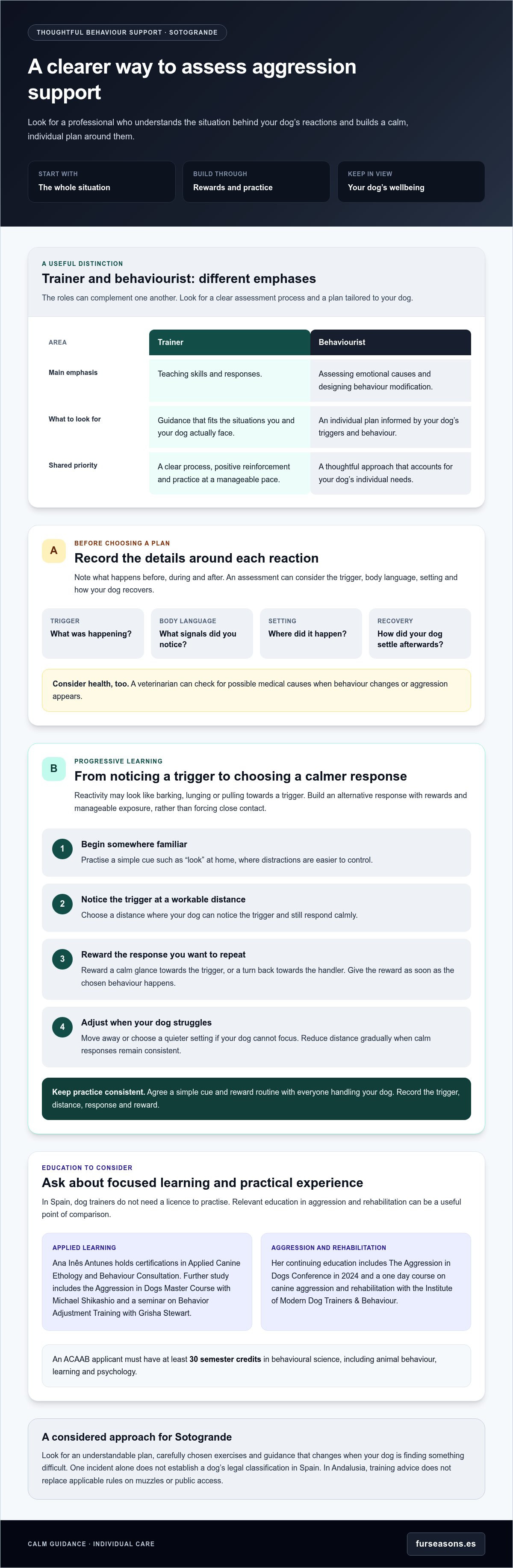
Start by recording what happens before, during and after each reaction. One aggressive incident alone does not establish a dog’s legal classification in Spain. In Andalusia, training advice does not replace applicable rules on muzzles or public access.
Aggression and Behaviour Assessment
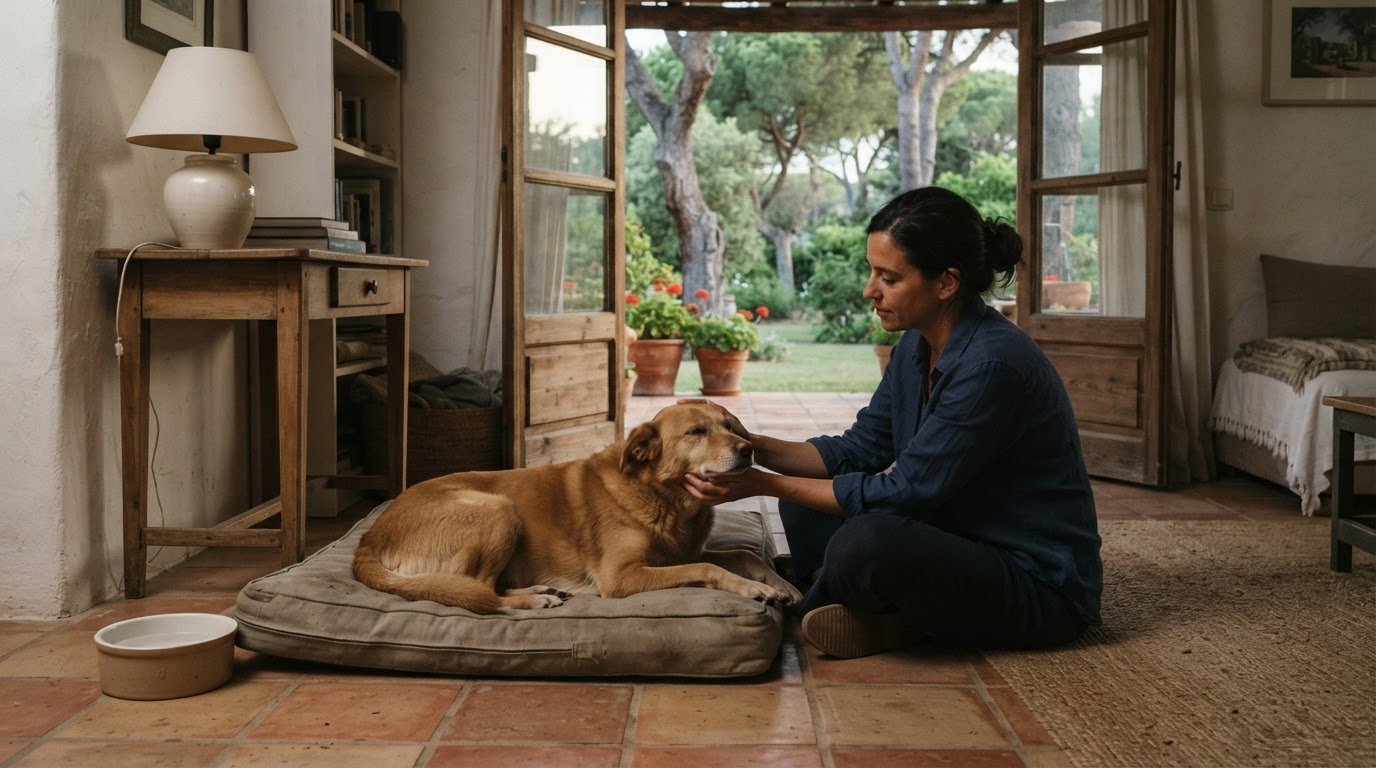
Health matters, too. A veterinarian can check for possible medical causes when behaviour changes or aggression appears. Relevant education and experience can help you assess a professional’s background.
Reactivity and Behaviour Modification
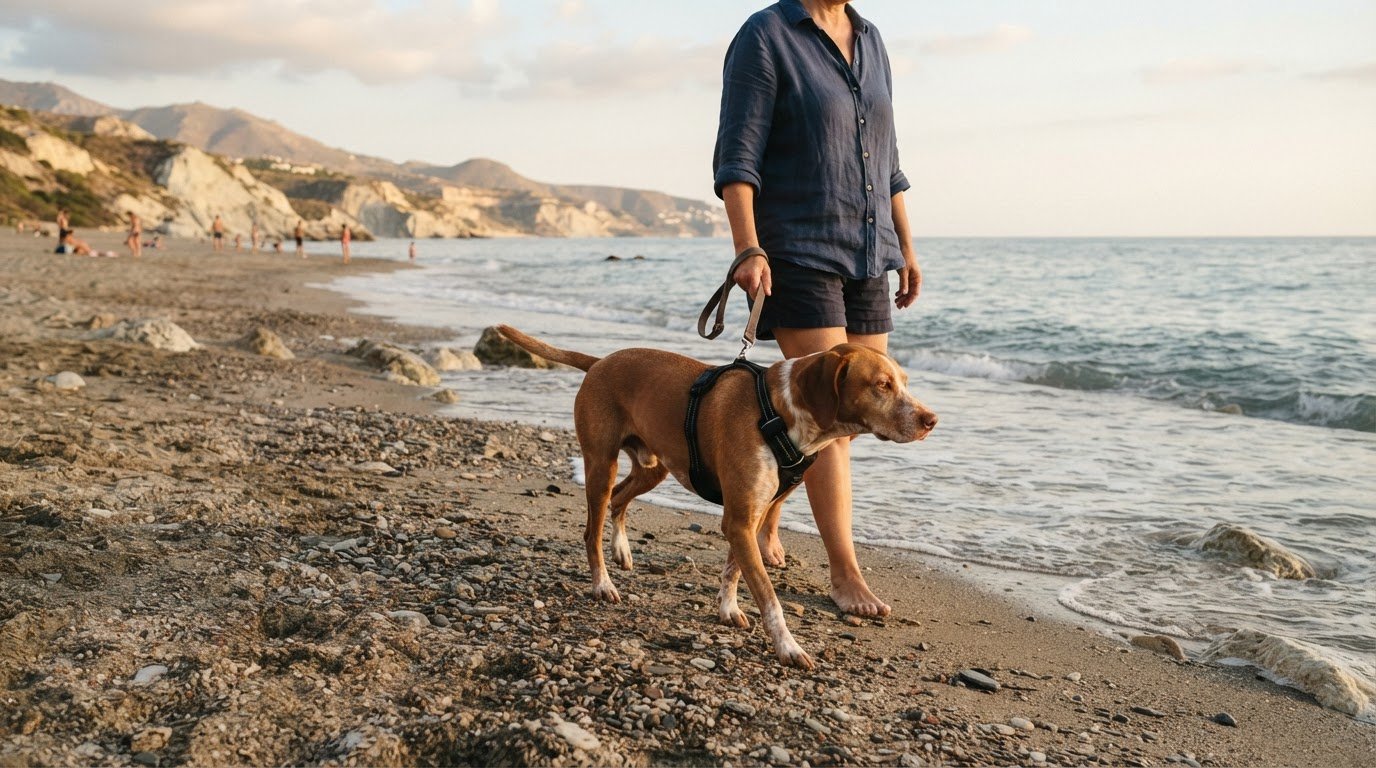
Reactivity can include barking, lunging or pulling towards a trigger, such as another dog at a garden gate. A behaviour plan identifies the trigger and the distance at which your dog can still respond calmly. Progressive exercises then build alternative responses through rewards and manageable exposure, rather than forcing close contact.
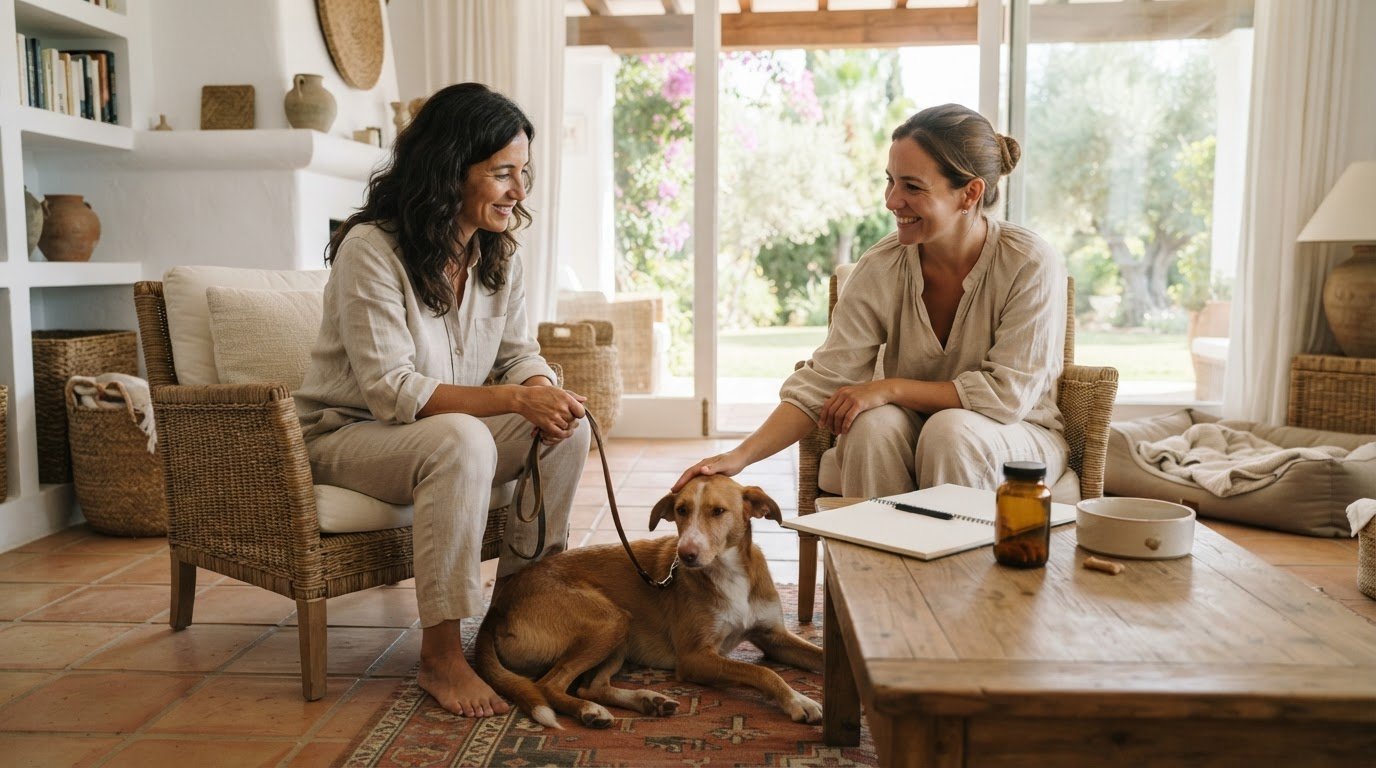
During an in-home behaviour consultation in Sotogrande, a professional can observe familiar situations, such as doorways, visitors or garden boundaries. Share a recent example and note what happened beforehand. These details help shape practical steps for home and nearby walks.
Qualifications offer another useful point of comparison. Ana Inês Antunes holds certifications in Applied Canine Ethology and Behaviour Consultation. Her further education includes the Aggression in Dogs Master Course with Michael Shikashio and a seminar on Behavior Adjustment Training with Grisha Stewart.
Positive reinforcement and progressive learning
Positive reinforcement rewards a behaviour your dog can repeat. A dog trainer for aggression issues in Sotogrande might reward a calm glance towards another dog. Giving the reward after the desired response helps your dog learn which action is worthwhile.
Timing matters. Give the reward as soon as your dog offers the chosen behaviour, such as looking back or walking beside you. If the reward comes after barking or lunging, your dog may associate it with the wrong action. Agree on a simple cue and reward routine with everyone handling your dog.
Build skills in manageable stages. Begin at home, where distractions are familiar and easier to control. Practise a cue such as “look” in a quiet room, then try it in a calm outdoor space. Near a known trigger, start far enough away for your dog to notice it and still respond.
Reward a calm glance towards the trigger.
Move away if your dog struggles to focus.
Reduce distance gradually when calm responses remain consistent.
These steps give your dog an alternative to barking or pulling. For example, a dog that reacts to passing dogs can learn to turn towards its handler and move away calmly. Short practice in familiar Sotogrande surroundings helps you identify which settings support learning.
Keep a simple record of the trigger, distance, response and reward. When choosing a trainer, look for guidance on adjusting practice when your dog cannot focus. Increasing the distance or choosing a quieter setting keeps the session focused on learning instead of enduring a stressful encounter.
An ACAAB applicant must have at least 30 semester credits in behavioural science, including animal behaviour, learning, and psychology. This can help guide trainer selection.
Aggression training and rehabilitation education
For aggression concerns in Sotogrande and surrounding areas, The Fur Seasons can address behaviour through structured, individual work. Education in rehabilitation adds knowledge about aggression cases, risk awareness and adapting exercises to the dog. Look for a trainer who explains their approach clearly and connects learning to situations you and your dog actually face.
Ana Inês Antunes attended The Aggression in Dogs Conference in 2024 as part of her continuing education. She also completed a one day course on canine aggression and rehabilitation with the Institute of Modern Dog Trainers & Behaviour. These details show focused study in the subject, rather than general training alone.
Education matters because aggression can involve different triggers and contexts. A dog that guards a resting place needs a different training plan from one that reacts to dogs on walks. Relevant learning helps a professional recognise these differences, choose suitable exercises and explain how you can practise between sessions.
Ask what the training process covers: how progress is reviewed, what you will practise, and how exercises change when your dog struggles. For example, if your dog cannot settle near a particular trigger, the next step should address that difficulty rather than simply repeat the same exercise. Clear explanations help you follow the plan consistently at home and in familiar Sotogrande surroundings.
The Fur Seasons: Overnight Care
The Fur Seasons offers Dog Training in Sotogrande for owners seeking structured support with their dog’s behaviour. If aggression is a concern, training can focus on practical skills and a plan suited to your dog’s needs. Overnight Care serves a different purpose: caring for your dog overnight when you are away, rather than replacing behaviour training.
Choose support according to your dog’s needs. Turn to Dog Training for guidance with behaviour and learning; consider Overnight Care when your dog needs attentive care during an overnight absence. Keeping these needs distinct helps you choose a service that fits your circumstances.
For a considered next step, contact The Fur Seasons on WhatsApp at +34 711 07 34 13 or visit furseasons.es.
Take the next step with confidence
Choosing a dog trainer for aggression issues in Sotogrande is a meaningful step towards calmer routines for you and your dog. Make the next move manageable: note the situations you want help with, then seek guidance that respects your dog’s pace and wellbeing. Progress can start with one thoughtful change to how you approach a familiar challenge.
The Fur Seasons also offers Overnight Care, Luxury Mobile Grooming and Day Care for other aspects of your dog’s care. These services complement a considered routine, while behaviour support remains the focus when aggression is the concern. Choose the support that fits your dog’s needs and take the next step with The Fur Seasons.
Contact The Fur Seasons to discuss your dog’s care, and take the next step towards a more settled future together.
Frequently Asked Questions
Are there dog trainers specialising in aggression near Sotogrande, Spain?
The Fur Seasons offers Dog Training in Sotogrande for owners seeking support with their dog’s behaviour. Start by describing the situations that concern you, such as tension around food or difficulty settling when household routines change. This helps clarify whether training fits your needs and which practical goals matter most in daily life with your dog.
What methods do Sotogrande dog aggression specialists use?
Training may use rewards to encourage useful alternatives, such as moving away from a contested toy or settling on a mat while visitors are present. Each exercise should suit the dog and the setting. Ask how the trainer will explain each task, how you can practise between sessions, and how the approach will change if your dog finds an exercise difficult.
How can I choose a safe trainer for a dog with aggression?
Choose someone who listens carefully, explains the proposed process and takes your dog’s comfort seriously. Before training begins, share relevant details, including known triggers, past incidents and who lives with your dog. A considered approach includes clear guidance for everyday handling, not just work during a session. Be cautious of anyone who dismisses your concerns or pressures you to proceed before discussing them.
Comments