

Dog park safety tips in Sotogrande for leashes and public behaviour

Updated: 2 days ago
A safe dog park visit in Sotogrande starts with a simple rule: keep your dog on a lead on public streets, and be ready to clip it back on if play becomes too intense or your dog seems uneasy. These dog park safety tips for Sotogrande focus on what matters most: deciding whether a shared space suits your dog and responding calmly to their behaviour.
It’s natural to want your dog to enjoy freedom, exercise and company, but a busy park isn’t comfortable for every dog. This guide explains how to manage the lead, practise useful cues and spot signs that your dog needs a quieter break. You’ll also find ways to make outings more comfortable in Sotogrande’s warm weather, so you can make thoughtful choices for your dog and those around them.
Table of Contents
1. Leash use in streets and public areas
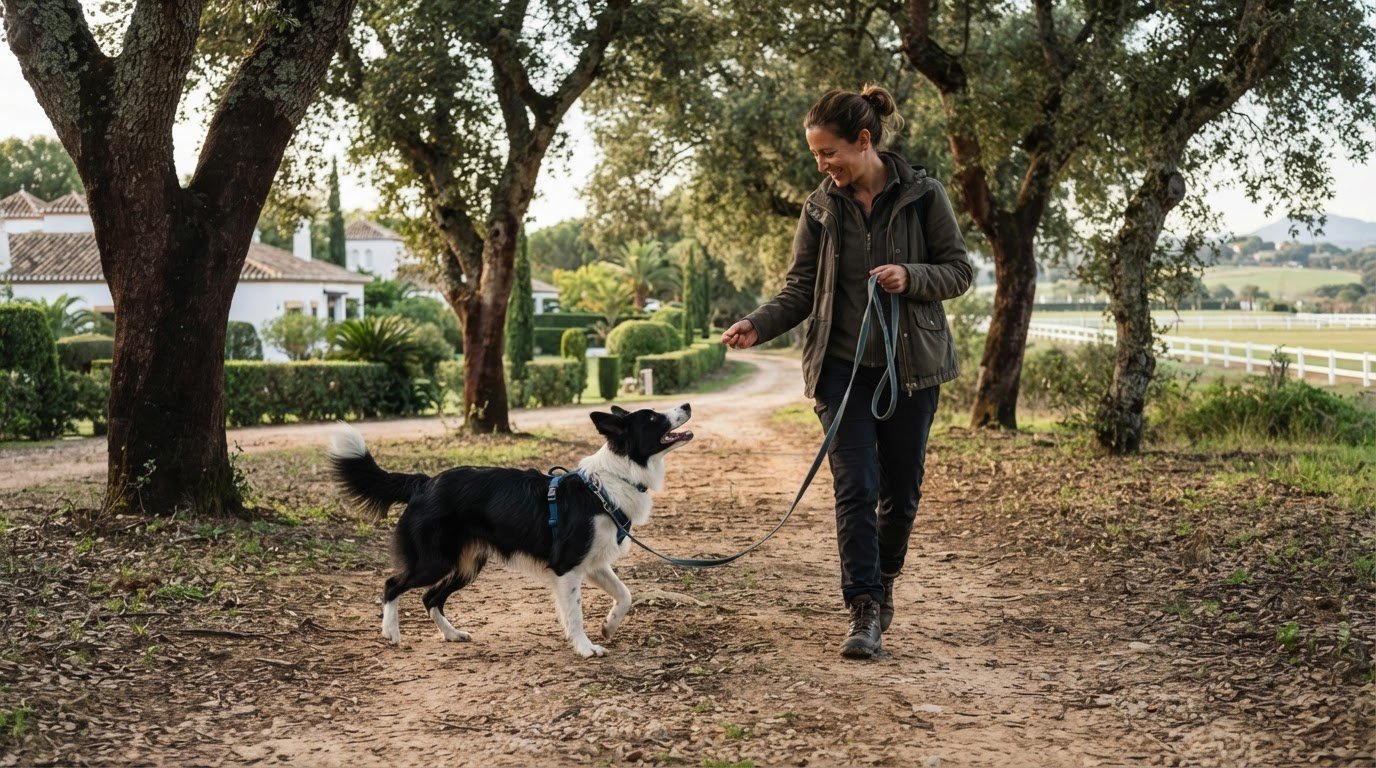
Keep your dog on a lead on public streets in Sotogrande. A lead gives you more control near traffic, pedestrians and other dogs. At the beach, keep your dog leashed and preferably use a muzzle. Check local access rules before visiting, as beach access may be limited in summer.
An off lead park isn’t the right setting for every dog. If yours finds groups overwhelming, choose an individual walk or a quiet route where they can explore at their own pace. A calm walk with space from other dogs may be a better outing than busy shared play.
At a park entrance, keep the lead on while passing through the gate. Watch for dogs approaching from inside, and secure the gate before unclipping. If your dog becomes pushy or uneasy, lead them away and redirect their attention instead of waiting for the play to settle.
Facilities, opening hours and entry fees near Sotogrande vary by site. Don’t assume a park has water, shade, waste bins or unrestricted access; check its arrangements before setting out. If the conditions don’t suit your dog, choose a leashed walk instead.
Let your dog set the pace. Off lead parks may not suit every dog; some are happier with individual socialisation or time to explore alone.
2. Dog training and behaviour in public spaces
Practise simple cues before visiting a busy park. Ask your dog to sit, come or leave an object, then reward a calm response. Good dog park safety in Sotogrande starts with familiar commands, which help you redirect your dog’s attention when another dog approaches or play gets too intense. Practise in quieter public spaces first, then gradually add distractions.
To introduce dogs carefully, keep both under control and begin with space between them. Let them approach gradually only while both seem relaxed. Pause if either dog stiffens, freezes or tries to move away. Read their body language rather than assuming they want to greet. If tension rises, create distance and calmly lead your dog away.
Watch for signs your dog needs a break, such as a tucked tail, trembling, cowering, repeated lip licking, raised hair or unusually heavy panting. Freezing or showing the whites of the eyes can also signal unease. Leave before these signs develop into a stronger reaction. Responding early can help prevent a stressful encounter.
Keep treats and toys to a minimum in shared play areas, as another dog may try to take them. If your dog guards a ball or becomes pushy around food, put the item away and redirect them with a familiar cue. Stay close enough to respond promptly, and reattach the lead if the behaviour continues. Calm, consistent practice can make public outings more manageable.
3. What safety precautions should owners take at a dog park in hot Sotogrande weather?
In Sotogrande, avoid exercising your dog in extreme heat. Choose a cooler time of day, keep play gentle and leave if it becomes too hot. On warmer days, good dog park safety tips for Sotogrande start with adapting the outing to the weather, rather than encouraging energetic chasing as temperatures rise.
Bring fresh water and a collapsible bowl, and offer your dog regular chances to drink. Having reliable everyday walking accessories from pippupets.co.uk can make staying prepared on the go much easier. Find a shaded place where they can rest out of direct sun. If the park has no shade, keep the visit brief and move somewhere cooler. A sunny, exposed space may not be suitable for continued play.
Stay attentive while your dog plays. Watch their pace and behaviour, and step in early if play becomes too vigorous or your dog seems uncomfortable. Guide them into the shade, offer water and end the outing if they need to rest. Staying nearby lets you respond promptly instead of waiting for a difficult situation to develop.
Treat signs of possible heatstroke as a reason to stop the outing. Cool them gradually with wet towels and contact a vet. Don’t continue the walk or return to play. Keep your dog resting in a cooler place while arranging veterinary care. Planning for water, shade and a prompt exit can make warm weather outings more manageable for you and your dog.
Keep your attention on your dog during play so you can supervise closely and step in before a problem escalates. Bring water and a collapsible bowl, and make sure your dog can access shade and water during the visit. Don’t exercise your dog in extreme heat; plan the outing so they can avoid the heat and rest in the shade.
If your dog may have heatstroke, cool them gradually with wet towels and contact a vet.
The Fur Seasons
If public outings show that your dog needs support with calm behaviour and familiar cues, The Fur Seasons’ Training can be a helpful next step. It can support skills that help your dog respond more comfortably around other dogs and in shared spaces. The goal is to make everyday outings more manageable by working on relevant behaviours.
If crowded parks overwhelm your dog, choose quieter walks and practise at a pace that suits them. Thoughtful training can help you understand what your dog is communicating and respond consistently, while keeping their comfort at the centre of each outing.
If you’d like to discuss dog care with The Fur Seasons, send a message on WhatsApp to +34 711 07 34 13 or visit www.furseasons.es.
Make every outing a little more considered
Your dog’s comfort can shape a more rewarding routine, whether that means a quiet walk, time to practise new skills or a gentler day at home. Keep adapting outings to the dog in front of you. Dog park safety tips for Sotogrande are most useful when they support your dog’s individual needs.
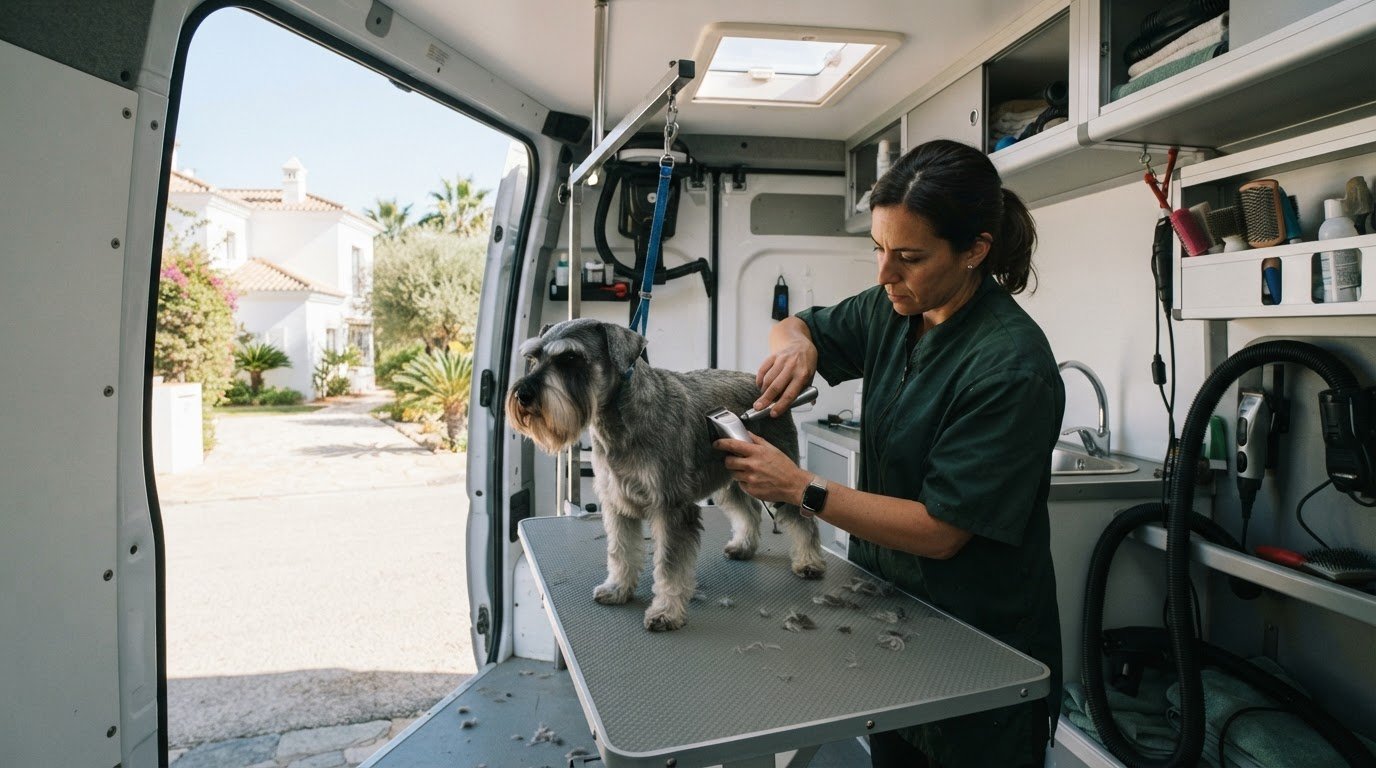
If you’d value extra support around your dog’s routine, The Fur Seasons offers Dog Training, Day Care, Overnight Care and Luxury Mobile Grooming. Each can complement a considered approach to your dog’s wellbeing, depending on the care you need.
Contact The Fur Seasons to discuss your dog’s care, and take the next step towards calmer, more enjoyable days together. 🐾
Frequently Asked Questions
Are there designated dog parks or off lead areas in Sotogrande, Spain?
Use an off lead area only where its signage or current local rules explicitly allow dogs to run free. Don’t assume an open green space is a designated dog park, even if other dogs are off lead. Check the rules at the specific site before unclipping your dog, and choose a leashed walk if access conditions aren’t clear.
What are the dog lead and public-space rules in Sotogrande and San Roque?
In Sotogrande, keep dogs on a lead in public streets. On beaches, keep them leashed and preferably use a muzzle; dogs are generally allowed on Sotogrande beaches from 1 October until 1 June. Beach access can be limited, so consult local authorities before visiting. Pick up after your dog in public spaces, including paths and park areas.
Are there risks from ticks, mosquitoes, or processionary caterpillars around Sotogrande parks?
Yes. Ticks and other parasites are a reason to keep up routine preventive care. Sandflies, rather than mosquitoes, transmit leishmaniasis, a concern in southern Spain. Pine processionary caterpillars are usually seen around Sotogrande pine trees from February to April. If your dog licks or bites one, act immediately and go to a vet.
Comments